What makes a good presentation
A great presentation is more than attractive slides. It combines strategy, storytelling, evidence, design, and confident delivery to influence decisions and inspire action.
I really don't feel like writing a full essay on this, so I'm going to skip the 15-step guide to making good presentations and boil it down to two things that I see work every day at work. A good presentation is anything that converts and looks good. It pains me to say this, but it doesn't even have to look good. Some of my design friends are probably going to come at me in the comments, but it's true.
If you have a presentation that is converting everyone you present to and it looks like shit, don't change it.
If it isn't broke, don't fix it.
Some of my design friends are probably going to come at me in the comments, but it's true. If you have a presentation that is converting everyone you present to and it looks like shit, don't change it.
If it isn't broke, don't fix it. Some people will tell you that you need a better-looking presentation just to sell you on a really expensive designer rate. It's true, that's coming from someone who has some outrageously expensive rates.
So, for everyone that killing it with their presentations, this isn't for you; feel free to leave. But before you do, do me a favor and scroll down to the bottom of the page and hangout their for two minute so my engagement doesn't tank. If you don't know if your presentations are working as hard as they could be, check out my ROI Calculator, where I show you how much money you are losing out on by having bad presentations.
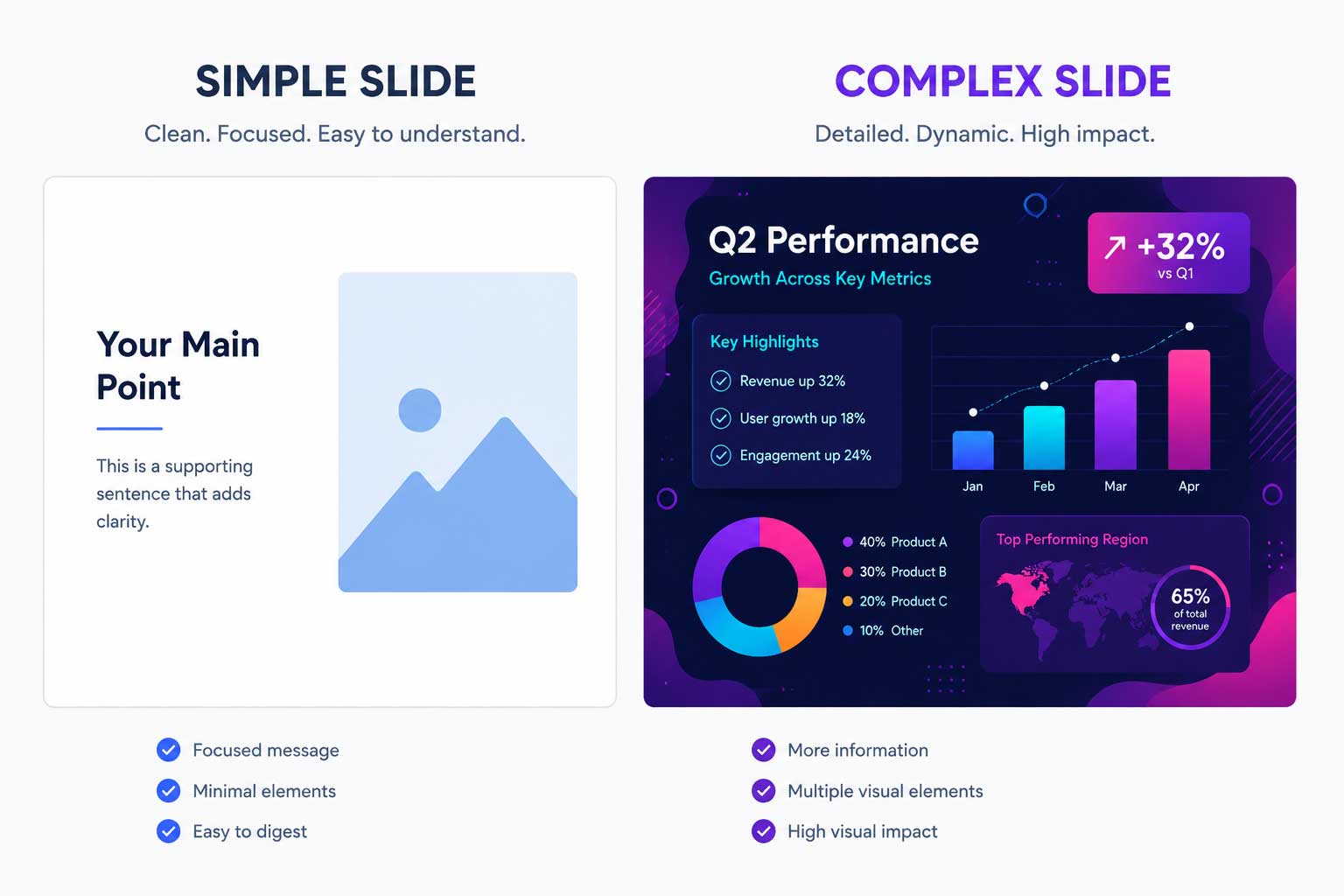
Looks isn't everything
When I designed my first professional presentation over 10 years ago, I had one goal. Make it look as cool as possible. Over the years, I have learned that that is not the best way to approach presentations.
Just like other superficial shit we obsess over that doesn't truly matter, a good-looking presentation is just surface-level. For it to work, everything underneath the hood needs to be working smoothly.
A lot of the time, companies throw together presentations last-minute for a product or service that is untested or has no value, and wonder why the presentations they paid some guy on Fiverr $15 to make.
There are a lot of things wrong with this approach, the main thing is not giving these guys the chance to make a living wage, but that's not what this is about. It's about companies having a shit offer with a shit position put inside of a document with a shit flow and wondering why that possibly talented designer you paid a shit commission to could turn that turd of a project into something useful to your business.
What really matters
1. Your ability to do the work
You need the skill to do the thing that you are trying to get the other party to buy. If you cannot do whatever it is you are pitching, chances are you will not be able to sell it successfully. Unless you are the best actor in the world, the client will see past the charade and move on to the next company that they have confidence can solve their problem. If it is a high-ticket item, they will be looking very hard to protect their investment and not get ripped off.
2. Your ability to communicate that you can do the work
Again, you need to be able to sell it. You could, in fact, be the best person for the job, but if you can not convince them of that to the people you are pitching to your not going to win. It is an investment, and from the other side of the table, it’s about limiting risks.
3. Your ability to show that you won't be a pain to work with.
The people you are presenting to are, in fact, people. They gravitate to people they like and steer clear of the people who seem like ass holes. Don’t be that ass hole!
4. hummm.... I was going to put design here, but I said earlier that the design didn't matter... let's say the Presentation of the Presentation. Ohh… Delivery!
Not just the look of the presentation, but also how you look when you present it. The confidence!
How to get that
That is a well-oiled machine. You get that by hiring a team that works well together and knows what they are doing. If I had to choose one of the two, I’d choose the team that works well together. I’ve seen many teams of talented people that couldn’t work together. And SUCK!
Who do you need on the team?
Pitch Lead
Owns the project, coordinates the team, manages timelines, and ensures the final presentation is cohesive.
Strategist
Defines the objective, audience, messaging, positioning, and overall approach.
Storyteller
Turns ideas into a compelling story with a clear beginning, middle, and end.
Subject Matter Expert (SME)
Provides deep technical or business expertise and ensures content accuracy.
Data Analyst
Analyzes metrics, KPIs, financials, and trends to support recommendations with data.
Copywriter
Writes concise, persuasive slide content, headlines, and key messages.
Graphic Designer
Produces custom graphics, diagrams, icons, and infographics.
Presentation Designer
Creates visually engaging slides that communicate ideas clearly and consistently.
A graphic designer and a presentation designer can be the same person, depending on the skill level.
Executive Sponsor
Provides strategic direction, credibility, and final approval.
Project Manager
Tracks tasks, milestones, deadlines, and cross-functional communication.
If I had to choose 5 people from this list, I’d start with… Pitch Lead to quarterback everything, Strategist to make sure we are focused on the purpose, Storyteller/copywriter to help us deliver that purpose in the most engaging way possible and to fix all of the misspellings, myself as the designer to clean up everything, and a project manager to keep everyone in line and focused on the main goal so we can meet that deadline.
Final Thoughts
A good presentation is more than a design. To make a good presentation, you need a team. And that is why presentations can be expensive to create. If you need help with figuring out how much it costs to get help with your presentations, check out my presentation cost calculator. It takes into consideration the needs for the job and gives you an instant quote.
